Real Estate Management
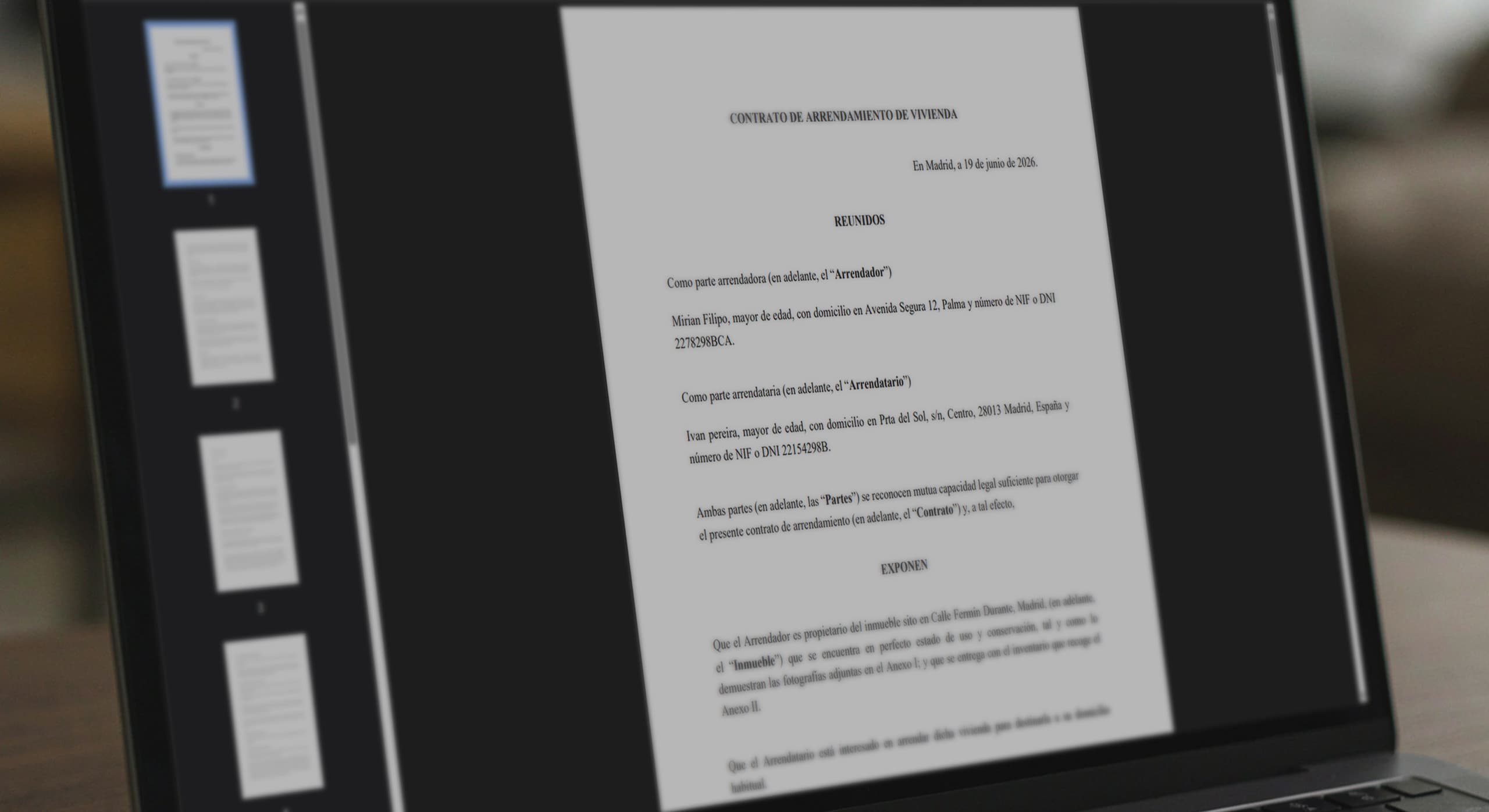
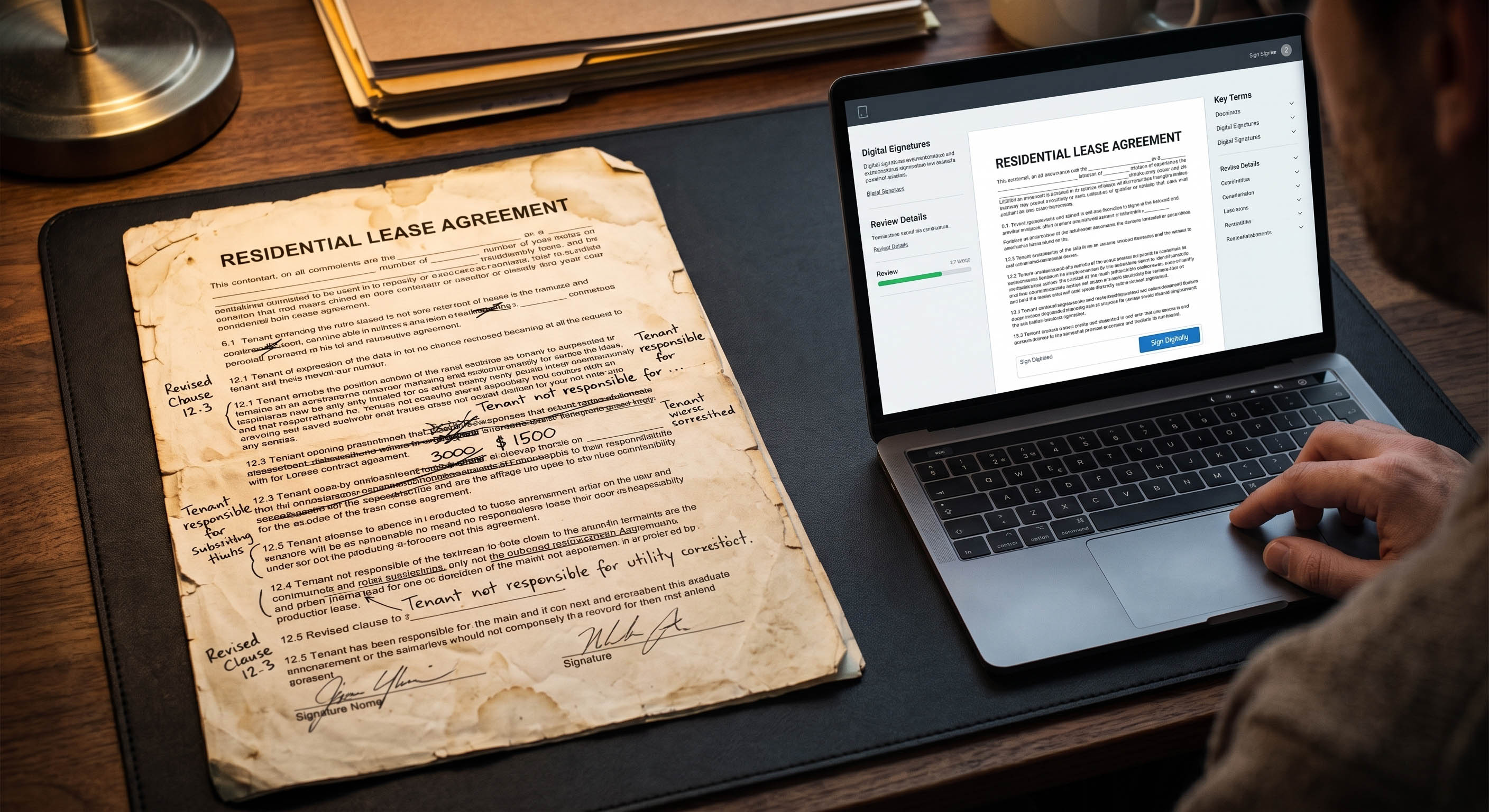
Signing a lease agreement is still, in many Spanish agencies, an in-person event involving printed paperwork, pens, and scans that end up in a folder nobody can find when needed.
In 2026, there is no justification for this—neither legal nor operational.
Digital rental contracts have full legal validity in Spain, are signed in minutes from any device, are stored automatically in the property record, and manage themselves throughout their lifecycle. If your agency is still printing contracts, you are investing time and resources into a process that should be invisible.
This is always the first question: is it legally valid?
Yes, without exception. Since the amendment to the Information Society Services Act (LSSI) and the adaptation to the European Union's eIDAS Regulation, electronically signed contracts have full legal validity in Spain when using qualified or advanced signature mechanisms. For urban lease agreements under the LAU (Urban Leases Act), an electronic signature is valid and enforceable before any court.
The two most widely used mechanisms in practice are:
Advanced electronic signature: Linked to the signer's identity via verified email or SMS code. It is valid for the vast majority of residential lease contracts and is the most agile option for an agency's day-to-day operations.
Qualified electronic signature: Issued with a recognized digital certificate. It offers maximum legal validity and is recommended for long-term contracts, high financial amounts, or complex clauses.
The question is no longer whether a digital contract is valid. It is why your agency is still printing.
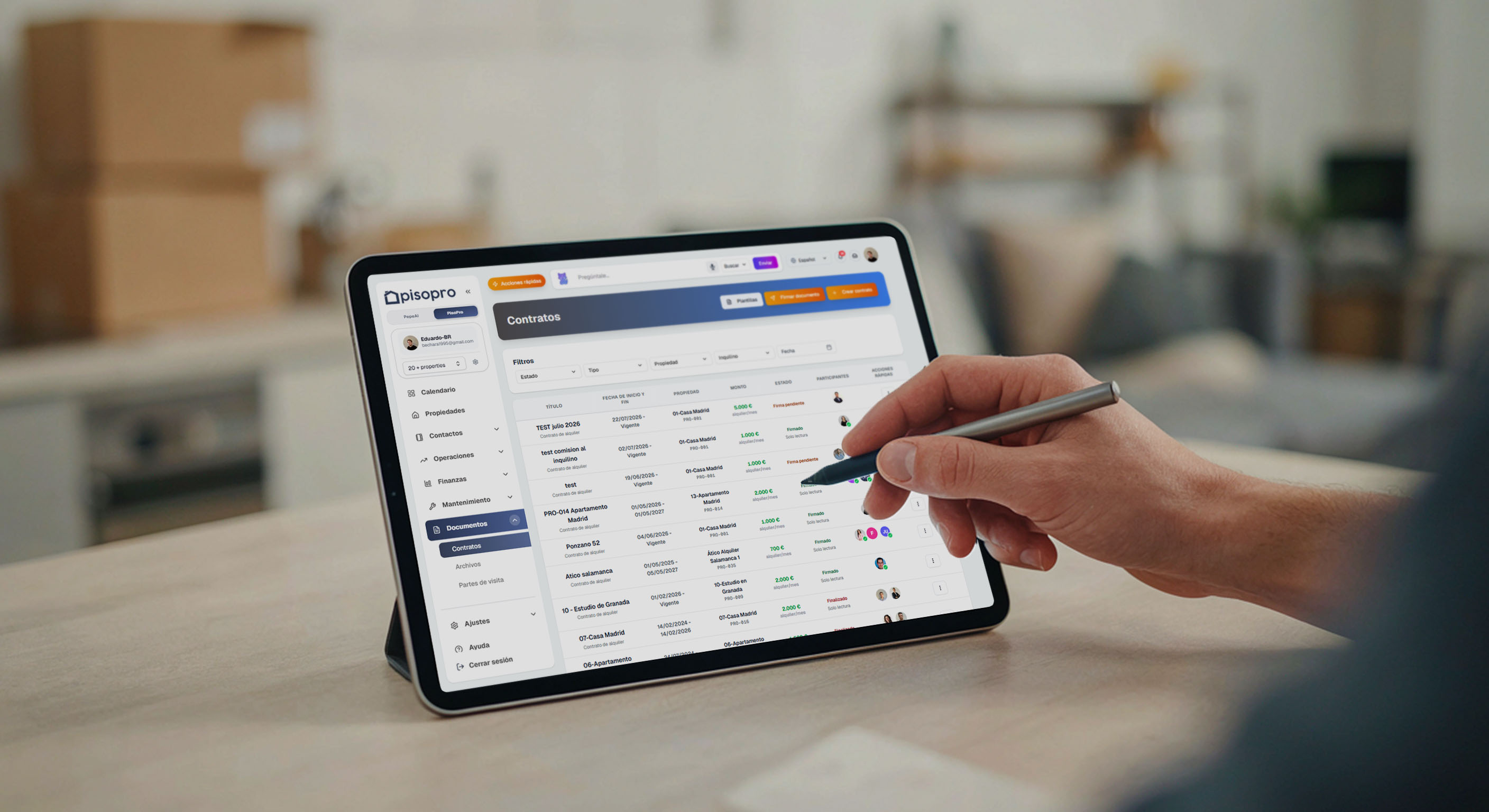
A well-configured property management system automates virtually the entire lifecycle of a lease agreement, from generation to closing. These are the four phases:
Automatic Contract Generation Based on the data of the tenant, the property, and the agreed conditions, the system generates the complete contract using an updated LAU template. Without opening Word, without copying and pasting data from one place to another, and without the risk of using an outdated version of the template. The property manager only reviews and confirms. The system handles the document assembly.
Frictionless Electronic Signature The generated contract is sent to the tenant and landlord by email or WhatsApp with a signing link. Each party signs from their phone or computer in less than 5 minutes, without downloading any app and without needing to be in the same location. The system registers the signature with a legal timestamp, stores the signed document in the property file, and automatically sends a copy to all signers.
Expiration and Renewal Alerts The system monitors the expiration date of each active contract and generates configurable alerts with as much advance notice as you set. The manager, landlord, and tenant receive automatic communications at the right time, in the right format, and with the legally appropriate content. Nobody has to remember anything. The system remembers for everyone.
Rent Review According to the CPI (IPC) When the annual rent adjustment is due, the system automatically calculates the new amount applying the current benchmark index, generates the notification to the tenant with the legally required advance notice, and updates the contract. The manager does not need to perform any calculations or draft any documents.
The LAU has undergone several significant modifications in recent years, with changes in deposit limits, rent adjustment conditions, and tenant protection clauses. Agencies using templates downloaded from the internet three years ago, or using the same Word version for years, run a real risk: having invalid clauses or omitting currently mandatory elements.
A contract with a void clause does not invalidate the lease itself, but it can generate conflicts, legal claims, and the cost of a lawyer to resolve them—a completely avoidable expense.
An updated management system keeps templates aligned with current regulations without requiring any manual effort from the agency. Legal updates automatically reflect in the system, and all new contracts generate using the correct version.
You do not need to make the transition all at once. A reasonable roadmap:
Configure templates in the system using your agency's data and standard terms.
Choose the electronic signature provider integrated with your management system (some include it by default).
Apply the digital process to new contracts and let existing paper contracts run their natural lifecycle.
Digitally archive historical records progressively, starting with active contracts.
In less than a month, new contracts will flow completely digitally, and the team will no longer think about paper.
Discover how pisopro can help you implement all these strategies and automate your property management.
Request demoSign in with Google to leave a comment
Loading comments...
Decision guide: what software for real estate agencies must include, who it is for, which modules matter, and when switching pays off.
Real Estate ManagementAI for property management: leads, incidents, Pepe’s end-to-end flow, and what still needs a person.
Real Estate ManagementReal estate CRM for agencies and rentals: lead-to-close flow, generic CRM vs operations, and how it looks in pisopro.