Real Estate Management
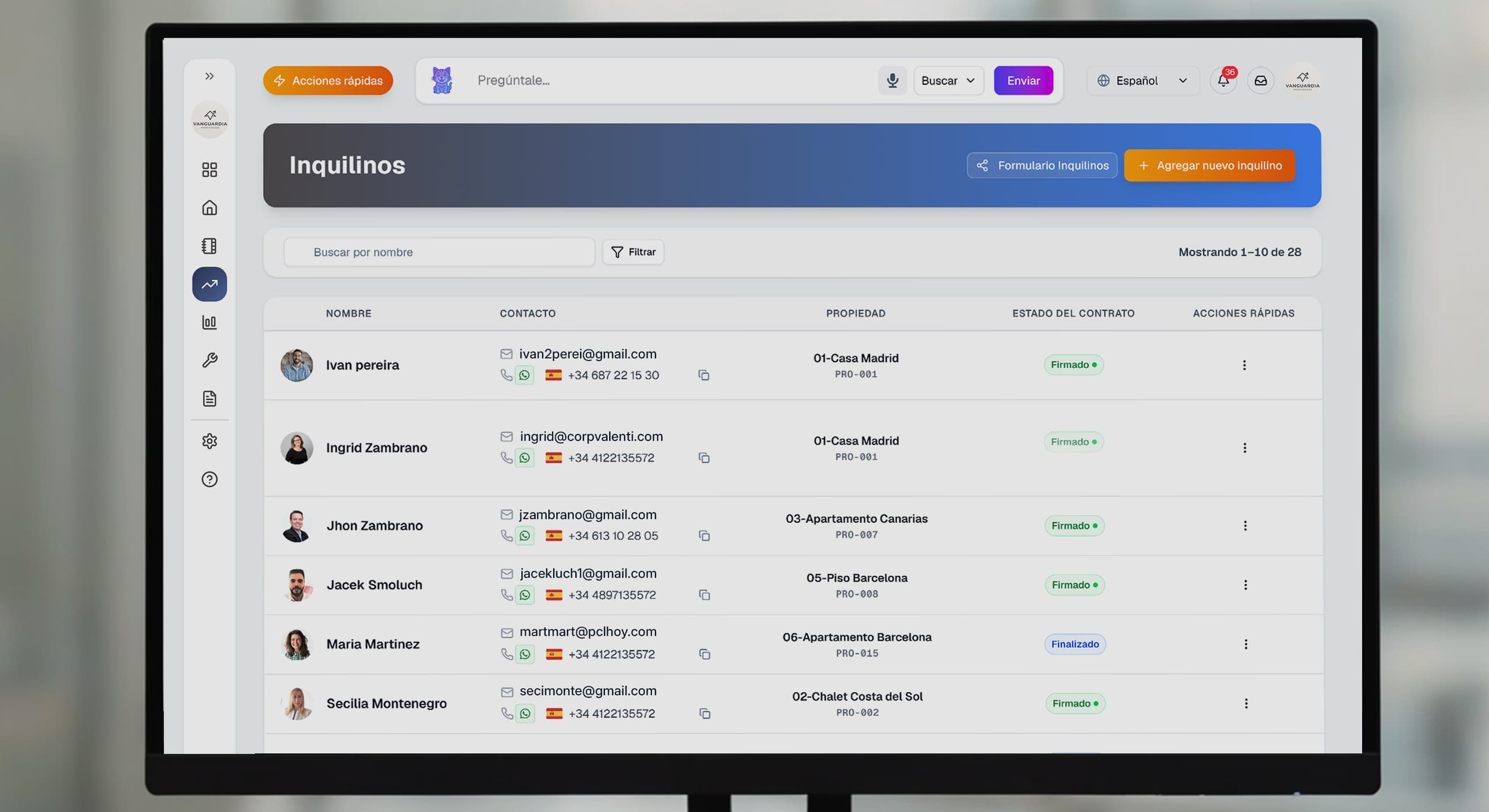
Here is the English translation formatted with clear Markdown headers (##), standalone bold subheadings, and distinct bullet points so your system or content editor can cleanly parse the structure (H2 headings, paragraphs, and lists).
A real estate agency managing rental portfolios actually has two types of clients at the same time: the tenant, who occupies the property, and the landlord, who is the agency's true client and the one paying the management fees.
Managing that relationship well with 10 property owners is manageable. With 50, it starts becoming difficult. With 100, without the right systems, it becomes chaotic.
This article explains how agencies that manage landlord portfolios professionally are organized, what tools they use, and where those without proper structure break down.

Before the diagnosis comes recognition. These are the warning signs that your agency is managing landlords without the appropriate structure:
Landlords calling to ask about the status of their properties because they have no other way of knowing.
Monthly financial settlements prepared late or with errors because each one has to be calculated manually.
Information from different property owners mixed up in the same files or inbox.
Inability to respond immediately to a landlord because the manager has to search in several places to piece together the situation.
Reliance on a specific person who "knows where everything is" and whose vacation halts operations.
If you recognize two or more of these symptoms, the problem is not your team. It is your architecture.
A management system designed for agencies with multiple property owners features a specific architecture that resolves this problem at its root.
Manager View A consolidated dashboard featuring all landlords, all properties, all active maintenance tickets, and all pending payments. You can filter by landlord, property, status, or date at any given moment. Everything is visible and accessible without searching through folders.
Landlord View Access strictly restricted to their own properties, revenues, and incidents. They cannot see information belonging to other clients or internal operational data—only what pertains to them, presented clearly.
This separation is not just a technical detail. It is what allows an agency to serve 80 property owners without one client's management interfering with another's, and without an error in one file contaminating the rest.
A property owner who can view the status of their properties in real time stops calling the manager to ask for updates, allowing the manager to reclaim hours of actual productive work.
The monthly financial settlement is the most critical document in the agency-landlord relationship. It details rental income collected, expenses applied to the property (repairs, insurance, HOA fees), agency commissions, and the net amount to be transferred.
Preparing this document manually for 50 landlords requires between 3 and 8 hours of work per month, dedicated entirely to administrative tasks that add no strategic value. With an automated system, settlements generate automatically at the end of each period using real system data, sending directly to the owner or publishing to their portal.
Preparation time drops to zero. Consequently, calculation errors—which at worst cause conflicts and reputational damage—are completely eliminated.
The landlord portal is a web or mobile interface where owners can view the status of their properties in real time without intermediaries: payments received, expenses applied, open and closed incidents, lease documents, and historical profitability data.
Agencies offering this level of transparency consistently report two measurable benefits:
40% to 60% reduction in routine inquiry calls, as landlords find answers before needing to reach out.
Significant increase in landlord retention, because transparency builds trust, and trust eliminates the incentive to look for alternative agencies.
A landlord who can access their information at any time has no reason to doubt their agency. Transparency is not just a service feature; it is the single best retention strategy in this business.

The goal of any ambitious, growing agency is not to add an administrative assistant for every 40 new property owners. It is to build systems that allow you to manage 40 additional owners with the exact same team.
Achieving this requires:
A centralized system where all information for every landlord is accessible instantly without searching.
Automated monthly settlements that eliminate manual closing tasks.
A landlord portal that drastically reduces incoming inquiry volume.
Automated alerts for critical dates (contract expirations, rent adjustments, insurance renewals) that no manager has to track manually.
Shared operational visibility across the team regarding portfolio status, ensuring no single employee is indispensable and anyone can cover for a colleague.
With these five elements in place, adding 20 new landlords to your portfolio becomes a repeatable, seamless process rather than an overwhelming operational burden. That is the difference between an agency that grows sustainably and one that suffocates under its own growth.
Discover how pisopro can help you implement all these strategies and automate your property management.
Request demoSign in with Google to leave a comment
Loading comments...
Decision guide: what software for real estate agencies must include, who it is for, which modules matter, and when switching pays off.
Real Estate ManagementAI for property management: leads, incidents, Pepe’s end-to-end flow, and what still needs a person.
Real Estate ManagementReal estate CRM for agencies and rentals: lead-to-close flow, generic CRM vs operations, and how it looks in pisopro.